
Update on my AI Predictions for 2025

I posted 12 AI predictions for 2025 in three parts in January. Here’s a mid-year(ish) progress update.
1.) Google will consolidate its newfound lead in AI video generation and lead the pack on AI world building
Google’s release of Veo 3 in May marked a major step change in AI video generation. As well as producing more realistic videos, which better adhere to real-world physics and the prompter’s instructions, it was the first (and currently only) model to generate realistic audio at the same time as the video. It fairly reliably renders word-perfect dialogue, sound effects and ambient noise. Its impact was quickly discernible in advertising and social media.
Being able to train its models on billions YouTube videos with impunity feels like a significant advantage for Google, although some impressive AI video models have followed, mostly from Chinese companies: ByteDance’s Seedance, Kuaishou’s KLING 2.1, MiniMax’s Hailuo 02, Alibaba’s Wan 2.2 (some of whom also have a lot of training video at their disposal courtesy of their video platforms - e.g. TikTok, Youku). Midjourney has also entered the video fray with its artistically inclined, but prosaically named V1 and Moonvalley has opened up access to Marey, which it’s positioning as “the world’s first commercially safe video model” (a claim Adobe has also made about Firefly video).
In addition to a potential training data advantage, Google is also well placed on the distribution side. Its ability to plumb its models into a portfolio of scale products is matched only by Meta (see prediction #2) and Apple (who are currently walking rather than running on AI). It’s already integrated Veo 2 into YouTube Shorts, with Veo 3 integration coming “later this summer”.
Google also released Flow, one of a new breed of AI tools for filmmakers augmenting traditional timeline-based editing. Since I wrote that round up, Runway has released a new model, Aleph, that’s focusses on modifying existing footage using natural language prompts.
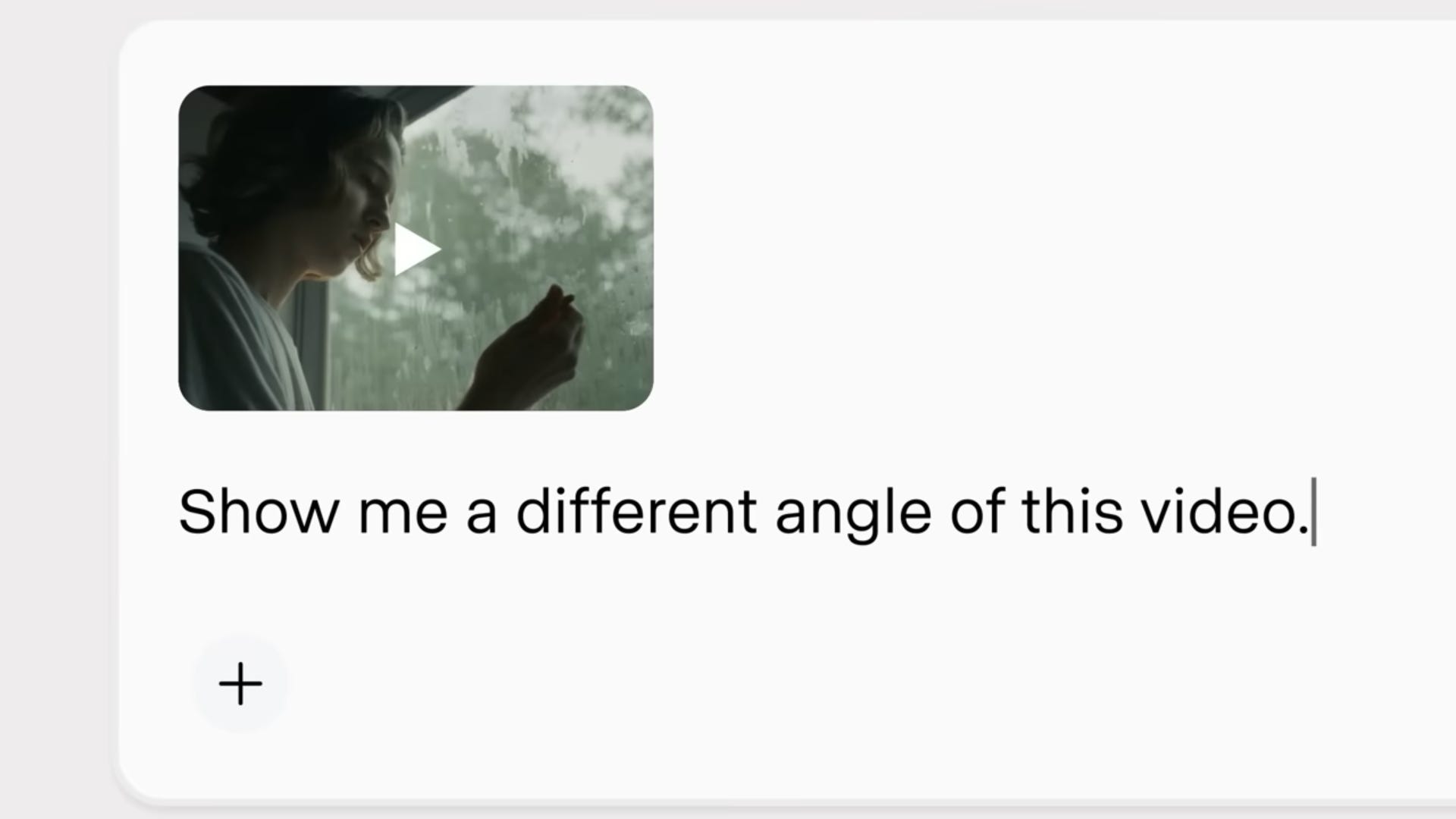
After teasing Genie 2 in December, Google hasn’t made a major release in the AI world building arena yet. However, DeepMind CEO, Demis Hassabis, replied to a post on X asking after playable world models with “now wouldn't that be something...” suggesting something is currently in the oven.
Meanwhile…
Microsoft has showcased its first World and Human Action Model, Muse
Tencent has open-sourced Hunyuan3D World Model 1.0
Exists has opened access to its 3D game world creation platform
Dynamics Lab has showed off ‘AI-Native UGC Game Engine’ Mirage
Runway has started testing its game-generation platform Game Worlds
SpAItial has emerged from stealth
ByteDance’s Seaweed APT2, Odyssey’s ‘interactive video’ and Decart’s MirageLSD have given us a glimpse of real-time, non-stop video generation/transformation
Mid-year grade: 6/10
2.) Meta will bring AI image and video generation/manipulation to the masses
Meta has been busy rolling out AI to its sprawling product portfolio. Meta AI launched in Europe in March across Facebook, Instagram, WhatsApp and Messenger and as a standalone app in April. In May, Mark Zuckerberg claimed Meta AI has 1 billion active users. In June, Meta announced an AI video editing feature, although it’s currently only available via the standalone Meta AI app/website and Edits app.
In May, TikTok introduced image-to-video feature AI Alive, accessible within TikTok Stories.
However, it’s been ChatGPT that has done the most democratise AI image generation in the first half of 2025 with the release of native image generation in March. According to OpenAI, over 130 million users generated more than 700 million images in the feature’s first week.
When it comes to video generation, Google looks to have had the biggest impact, with over 40 million Veo 3 videos generated within its first seven weeks.
However, we’re only half way through the year and I will eat my AI-generated hat if Meta doesn’t do big with AI image and/or video generation in Instagram in what’s left of 2025.
Mid-year grade: 5/10
3.) OpenAI will rebrand ChatGPT as Chat
OpenAI refreshed its branding in February, but hasn’t yet dropped the GPT from ChatGPT. The launch of GPT-5, which is expected in the next few weeks, could be an opportunity to simplify the name as well as the product (*doesn’t hold breath*)
Mid-year grade: 0/10
4.) Amazon’s sleeping AI army will wake up and become the in-home default for many
Alexa+, Amazon’s “next-generation assistant powered by generative AI”, arrived in February, but its roll out has been slow. Like Apple, it appears Amazon is finding the business of integrating generative AI smarts into an existing product more difficult that those surveying a greenfield.
Mid-year grade: 2/10
5.) AI assistants will gain meaningful persistent memory
OpenAI expanded ChatGPT’s memory feature in April, giving users the option of having it draw on all their previous conversations, not just a limited number of discrete ‘memories’ manually added or inferred from chats.
A few days later, xAI announced it was adding memory capabilities to Grok and the following month, Microsoft added a memory feature to Copilot.
There have also been some new entrants into the crowded team messaging space, who are trying to make AI + memory their USP. Launched in February, Tanka positioned itself as “the first AI messenger with long-term memory”.
Meanwhile, research continues apace with MemOS heralded as the first ‘memory operating system’ that gives AI human-like recall.
Mid-year grade: 8/10
6.) Character consistency in AI visuals will become trivial
Advances have come thick and fast in this space.
It started with research breakthroughs. In February, ByteDance showed off Omnihuman-1 and in March, Meta introduced MoCha.
Then the consumer products started to arrive: Runway’s Gen-4 References, Midjourney’s Omni Reference, Higgsfield’s SOUL ID, Ideogram’s Character.
My sub-prediction of “the same progress with object consistency, greatly increasing the utility - and therefore adoption - of AI image and video generators in advertising creative” has also come to pass.
However, I’m going to hold off giving myself top marks, as the capability hasn’t yet become ubiquitous.
Mid-year grade: 8/10
7.) Kids animation and online creators will lead the adoption of on-screen AI
Whilst many online creators had been experimenting with AI prior to Veo 3’s release in May, its arrival turned a stream into a flood.
It coincided with a number of the most talented AI video creators, who had been honing their craft by making trailers, short films and spec ads, starting to make content for advertisers and established TV production companies.
Martin Haerlin, whose early experiment with Runway & ElevenLabs I used to use in presentations to illustrate what one creative person could achieve with AI video in 2023, has been co-creating animated ads for juice maker Rauch Fruchtsäfte.
László Gaál, who created impressive (at the time) spec ads for Volvo and Porsche, is credited as ‘AI artist’ on an actual ad for trading platform eToro.
PJ ‘Ace’ Accetturo rapidly followed his assault-on-the-senses ads for prediction market Kalshi with an equally bombastic ad for US fast food chain Popeyes.
And Max Einhorn’s factual AI content studio Gennie created the AI sequences for SKY HISTORY’s six-part documentary, Killer Kings.
In June, the South Korean producer of the Oscar-winning Parasite, announced a strategic push into AI production. Its first release? A kids animation, Cat Biggie, released on YouTube in 30 two minute episodes (ep 1 embedded below). It reportedly took “just six specialists over five months - including content planning and character development”. They cannily took the Mr Bean approach of having no dialogue, removing the need for translation and lip syncing (which still isn’t easy to get seamless).
Mid-year grade: 8/10
8.) Smaller, more efficient AI models will proliferate and open source will close the gap with proprietary models
And how. It’s been hard to keep track of the deluge of highly performant and affordable open-source models being released, predominantly from Chinese labs.
Alibaba’s Qwen 3, Moonshot’s Kimi K2, MiniMax-M1 and most recently, Z.ai’s GLM 4.5 and StepFun’s Step3 are now competitive on key benchmarks with proprietary flagship models from OpenAI, Google, Anthropic, and xAI - sometimes even outperforming them in reasoning, code generation, or agentic tasks.
It’s not just Chinese companies. Google and France-based Mistral released Gemma 3n and Mistral Small 3.1 - both small, efficient models - as open-source, whilst Meta put out Llama 4 Scout on a nearly-but-not-quite-open-source basis.
Mid-year grade: 9/10
9.) AI agents will proliferate but won’t be reliable enough outside of a few narrow domains
We’ve definitely seen a proliferation, both in standalone agents (Manus, GenSpark) and in agentic (God I hate that word) browsers (Comet, Dia).
The rapid adoption of Model Context Protocol (MCP) has made it much easier to connect AI models/apps with other apps and services.
We’ve had OpenAI combine Operator and Deep Research to create ‘Agent mode’.
We’ve also had daft headlines like “China’s Autonomous Agent, Manus, Changes Everything” (spoiler: it doesn’t).
In practice, reliability remains a real challenge. Beyond the AI hucksters/grifters on LinkedIn and X, most people report disappointment and frustration at AI agents’ ability to reliably complete multi-step tasks (see Timothy B. Lee’s attempt to get ChatGPT agent to do his grocery shopping).
Agents which only get the job done some of the time bring to mind the problem Alexa’s experienced since launch - if it often fails when you ask it to do new things you stop asking and fall back on a few reliable use cases (in Alexa’s case, timer and audio streamer, for the current crop of agents, bounded deep research tasks).
Browsers are the logical place to try and get agents working for some common use cases although getting users to change browsers feels like the 2025 equivalent of getting someone to change banks in the 1980s.
As I wrote in January, “the companies most likely to succeed with AI agents are those who already control our browsers and operating systems”. Microsoft has already begun evolving Edge (~5% global browser share) in this direction, Google has started integrating Gemini into Chrome (~67% global browser share) alongside the more agentic (dammit) Project Mariner, and doing likewise with Safari (~17% global browser share) is presumably somewhere on Apple’s gargantuan AI product backlog 🤷
Mid-year grade: 8/10
10.) AI assistants will get better at triage / air-traffic control
A couple of weeks after I posted this prediction, OpenAI’s CEO, Sam Altman, acknowledged the problem (“We hate the model picker as much as you do”) and promised to address it with GPT-5.
Claude 4, released in May, felt like a step in the right direction, by introducing hybrid models capable of deciding which mode (normal or extended thinking) is required for the task at hand (rather than you having to manually select).
With the release of GPT-5 reportedly now imminent, we’ll soon see how close OpenAI has got to its goal of a “return to magic unified intelligence”.
Mid-year grade: 7/10
11.) Smart glasses will become an AI battleground with Google (re)entering the fray
Meta has continued to push hard on smart glasses, running star-studded Super Bowl ads (below), unveiling experimental next-generation glasses, launching new consumer product and acquiring a 3 percent, $3.5bn stake in EssilorLuxottica.
In February, we learned that 2 million pairs of Meta Ray-Bans had already been sold. On Monday, EssilorLuxottica reported sales were up 200% year-on-year in the first half of 2025. On Wednesday, Mark Zuckerberg told investors on Meta’s Q2 earnings call that in the future those without smart glasses would “probably be at a pretty significant cognitive disadvantage compared to other people".
Google demoed its Android XR platform at Google I/O in May (see below video) but hasn’t yet announced its own branded smart glasses.
Meanwhile, some of China’s tech behemoths entered the frame (pun intended): Alibaba, Xiaomi, ByteDance.
Mid-year grade: 7/10
12.) Microsoft and/or Amazon will acquire a major AI startup
Not yet. Amazon hoovered up AI wearables startup Bee a couple of weeks ago for an undisclosed sum and is reportedly contemplating doubling its stake in Anthropic.
Like Meta, Microsoft seems primarily focussed on poaching AI talent from competitors.
Meanwhile, reverse acquihires continue to be in vogue, with Google acquiring Windsurf’s key personnel and a non-exclusive license to its technology for $2.4 billion, after an old school acquisition by OpenAI fell through.
Mid-year grade: 0/10
If my (ok Claude’s) calculations are correct then my grades average out at 5.8/10 which I’m pretty happy with at this point in the year.
See you back in here in five months time for my final grades, my end-of-year review and my predictions for 2026.
The estimable Graham Lovelace asked over on LinkedIn whether I had any additional mid-year predictions. Here's my reply:
13.) Breakthrough in reducing hallucination rates
Whilst hallucinations are an inevitable feature of next-token prediction machines, LLMs can be paired with other non-probabilistic systems to reduce hallucination rates. I anticipate we’ll see a material breakthrough in this area in H2 2025 (although our vigilance will need to increase rather than decrease as hallicinations will be further reduced rather than eradicated entirely).
14.) AI tools will become more collaborative / multiplayer
The majority of today’s AI tools are designed for solo use. You can share Projects, Artifacts and Notebooks but none of them were designed for realtime collaboration. I predict we’ll start to see more AI tools and features that have collaboration at their heart rather than bolted on.
15.) The AI investment bubble will start to deflate
I’ve written before about the distinct dimensions that are often conflated under the bubble heading: hype, investment and transformative potential. Whilst I believe most people are still underestimating its long-term transformative potential, the current levels of spend are out of proportion to near-term returns. I expect to see some market corrections to this.
16.) Discussion of AI will become less polarised and more nuanced
Ok, this one may be more a hope than an expectation. The conversation about AI has become very polarised with entrenched ‘for’ and ‘against’ camps. I believe that’s too reductive for a technology with such broad applications. I would love it if the conversation started to move on to when and how to make effective and responsible use of AI and keeping AI companies accountable, rather than two warring camps promising utopia / raging against the machine.